Monetizing Digital Public Infrastructure
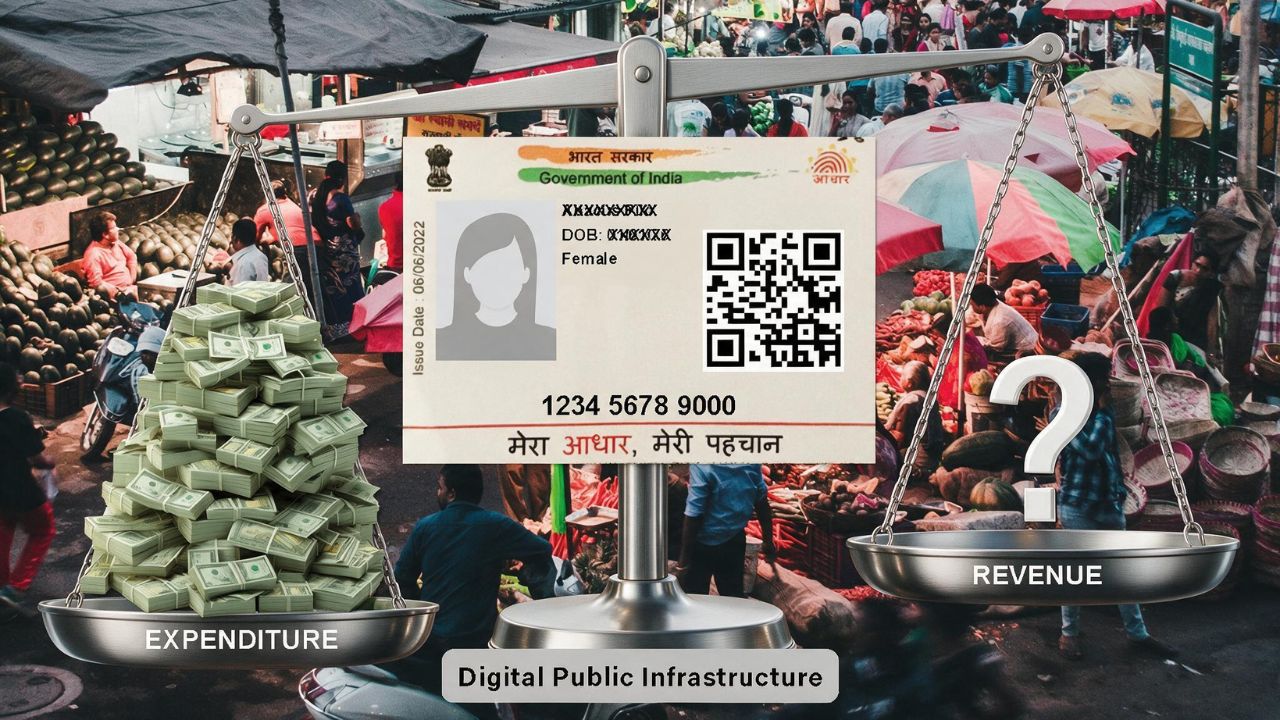
How do countries learn from the Emerging India model, reap the second-mover advantage by avoiding India's first-mover mistakes?
Building public infrastructure is expensive. However, it is a critical, foundational investment that typically yields substantial long-term economic returns. While physical infrastructure requires significant upfront capital, it creates jobs, improves logistics, enhance productivity, foster long-term economic competitiveness, and have a multiplier effect on GDP.
Digital Public Infrastructure (DPI) is no different. DPI is critical and foundational to a digital economy and requires significant upfront financing. Is there a way to quantify the cost function for DPI and the potential economic returns? How can countries monetize their investments in DPI? Can we quantify the value function for DPI?
India has over a decade of experience with operationalizing population-scale DPI. What are the lessons that other countries rolling out national digital identity projects can take from the Indian experience? We quantify the cost and value functions and show the potential return on investment (ROI) for DPI. We show how other countries of the Global South can learn from the Emerging India model, reap the second-mover advantage by avoiding India’s first-mover mistakes.
Universal to Foundational
Digital Identity is foundational to digital infrastructure. Aadhaar was conceived as a universal ID, a cardless biometric ID that could authenticate and authorize access to services. The first Aadhaar ID was issued in September 2010. By the end of 2013, over 300 million Aadhaar IDs had been issued, by the end of 2016, over a billion, reaching saturation levels by 2018.
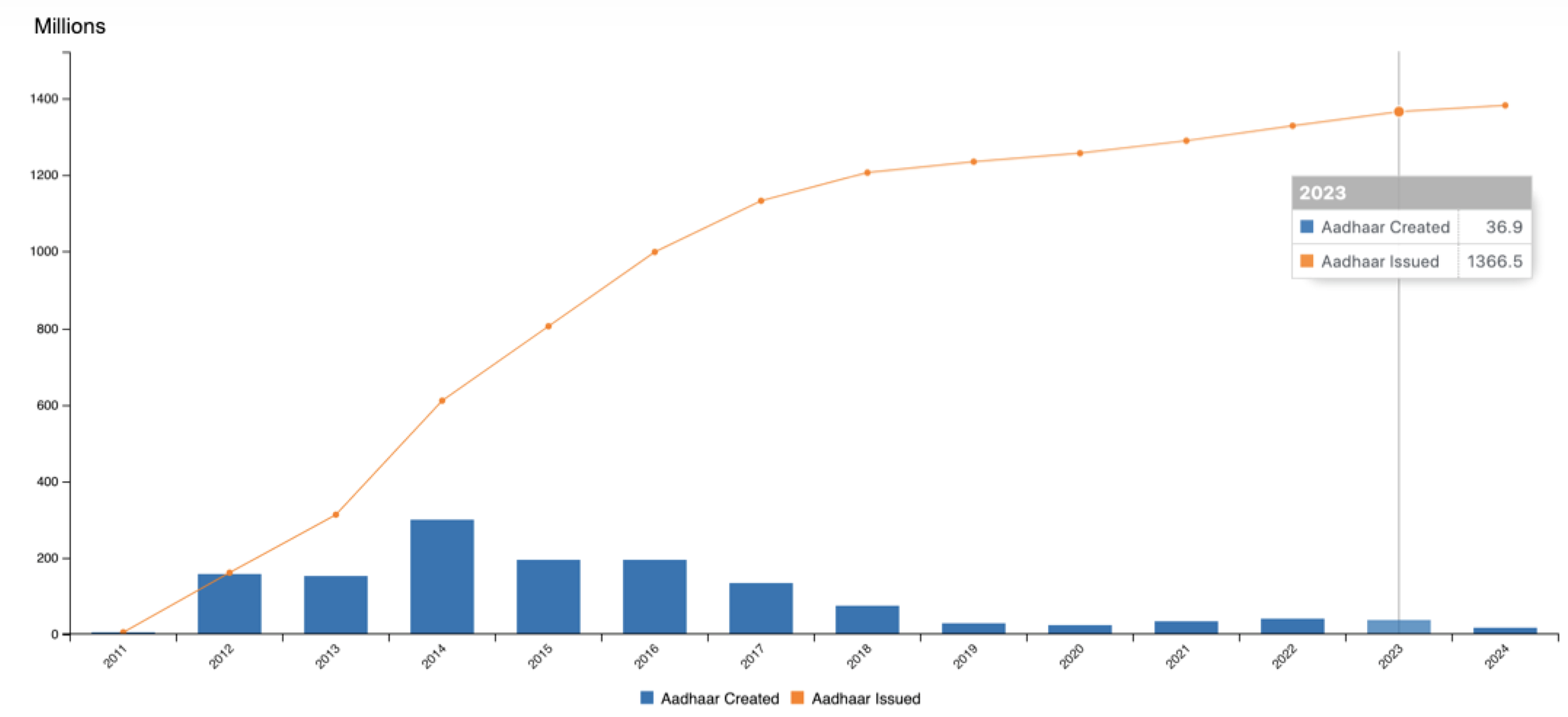
While the issuance of Aadhaar IDs reached its intended target by 2018, the broader socio-economic impact was negligible. Critics and activists voiced strong concerns, citing media reports of significant security breaches, high rates of biometric failure, and tragic instances of starvation deaths due to the inability of the poor to access benefits because of technical flaws. The system was condemned for potentially establishing a surveillance state and causing widespread exclusion from social welfare programs.
The growing use of Aadhaar led to several petitions being filed in the Supreme Court challenging its use, citing privacy concerns. Concerns were also raised about its use being mandatory for receiving benefits. Aadhaar scanners breaking down in the field and patchy 3G/4G wireless connections prevented many from receiving the benefits that they were entitled to. In 2018, India’s Supreme Court ruled that Aadhaar could not be made mandatory to open bank accounts, get mobile phone connections, or receive social security benefits.
The rush to assign IDs to every resident also led to unintended data errors. When an individual’s date of birth could not be confirmed, it defaulted to January 1, and an approximate year of birth was recorded. It was reported that in some areas, most residents had January 1 as their birth date on the Aadhaar ID cards. Concerned with these data errors, the Supreme Court in further rulings disallowed Aadhaar as an authoritative proof of address or date of birth.
While the Supreme Court upheld the constitutionality of the Aadhaar Act, it significantly limited its scope. Aadhaar was conceived as a universal ID, a card-free system using biometrics, a single system that would eliminate the need for multiple documents to establish identity and prove eligibility to access services; a single key that could authenticate and authorize. The Supreme Court rulings put an end to that.
Despite an investment that exceeded $1.3 billion by 2018, the Aadhaar project showed few positives to justify its cost. Shackled heavily by legal, ethical, and practical limitations regarding privacy and mandatory use, Aadhaar’s future was in doubt. Critics called on the government to dismantle Aadhaar. Aadhaar in Hindi means ‘foundation’. The government went back to basics, and reframed Aadhaar back to its original intent, as a foundational ID.
Aadhaar was reborn as a foundational ID that would not replace but link all other functional IDs (driver's license, tax ID, bank account, passport, health ID, child registration ID, etc). It allowed for the separation of concerns , with data secured in registries where it always resided, with ownership of data well defined, while allowing the foundational ID to guarantee uniqueness and asset ownership. The separation of concerns ensured that privacy issues were separated from identification issues. Aadhar, the foundational ID, managed authentication, while the functional IDs managed authorization.
Flipping the script on Aadhaar would lay the groundwork for the Digital India Stack, putting it on firm architectural foundations, and providing the framework for India’s socio-economic transformation. The Supreme Court’s nuanced judgment upholding the constitutionality of the Aadhaar Act while declaring privacy as a fundamental right, transformed a costly technological failure into an architectural success.
Inflection Year
Recasting Aadhaar from a universal ID to a foundational ID that linked other functional IDs proved to be a pivotal change. In 2018, three key factors converged – saturation coverage of Aadhaar IDs, saturation coverage of bank accounts (through Jan Dhan Yojana), and a dramatic fall in mobile data rates (enabled through Aadhaar-based paperless authentication that significantly brought down customer acquisition costs). This trifecta (referred to as the JAM (Jan Dhan, Aadhaar, Mobile) trinity) would create the foundation for India’s rapid digital, financial, and socio-economic transformation.
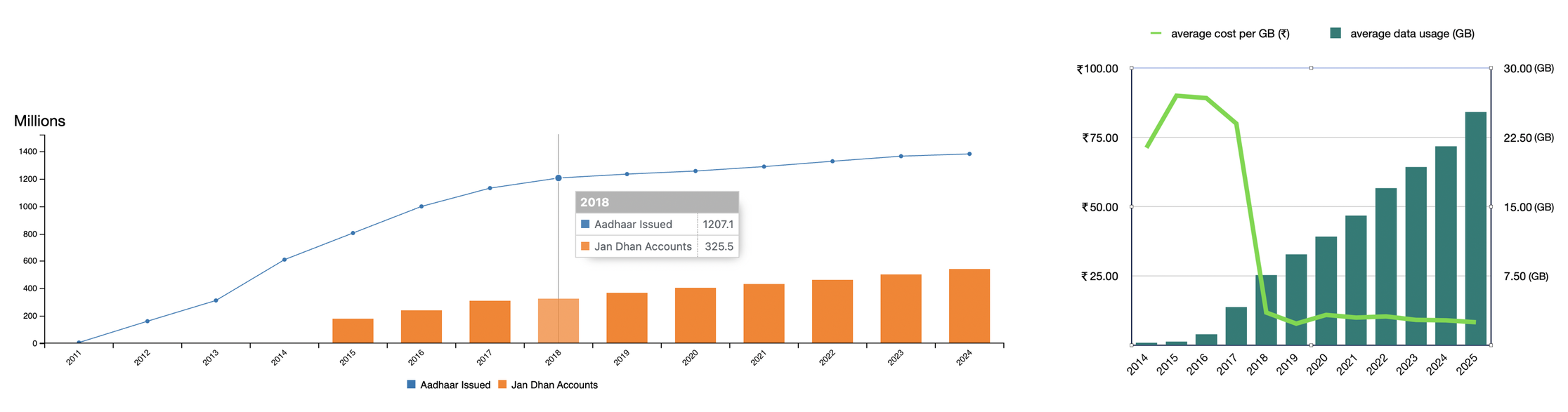
Linking Aadhaar with a bank account enabled Direct Benefits Transfers (DBT). Linking Aadhaar with a bank account and mobile phone enabled cashless digital commerce (UPI). Paperless authentication, enabled by Aadhaar’s eKYC API, brought down identity verification costs from $12 to $0.06. First-movers who took advantage of paperless authentication reaped the benefits. Reliance Jio increased its telecom market share from 1.52% in 2016 to over 40% in 2024. SBI (State Bank of India), which created the most Jan Dhan accounts, saw its profits climb to over $7 billion in FY2024.

DPI-enabled reforms in the delivery of social benefits, telecom, and banking, lifted over 250 million people out of poverty and firmly established India as the fastest growing large economy in the world. Financial inclusion empowered individuals, boosted businesses, fostered growth, alleviated poverty, and promoted equity. It was also extremely profitable for first-mover telecom, banking, and services companies.
Multilateral Development Banks (MDBs) are heavily involved in funding and implementing digital identity systems as part of a broader push for DPI to foster financial inclusion, improve service delivery, and enhance economic growth. Right-funding these initiatives is key to ensuring sustainability and achievement of goals. Inadequate funding risks exclusion and widening the digital divide, while overfunding risks putting countries into a debt spiral. We now take a deeper look at costs for DPI and the expected return on investment.
The Cost Function for DPI
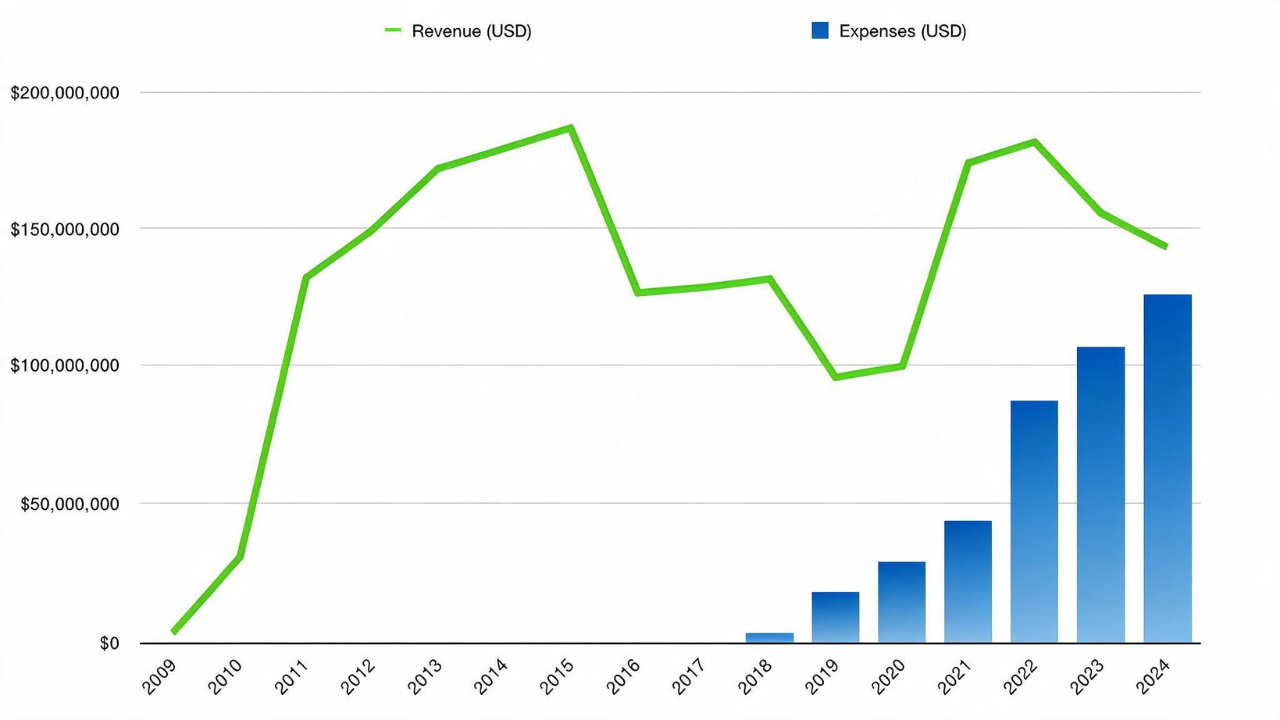
The figure below shows the expenditure and revenue over the years of UIDAI (Unique ID Authority of India), the public sector company managing Aadhaar.
The Aadhaar system supports an API for registration and two APIs for authentication: a Yes/No response to authenticate identity and an API for eKYC (electronic Know Your Customer), which given an Aadhaar ID responds with details about the individual that include name, address, and a photograph, which can be used to confirm identity.
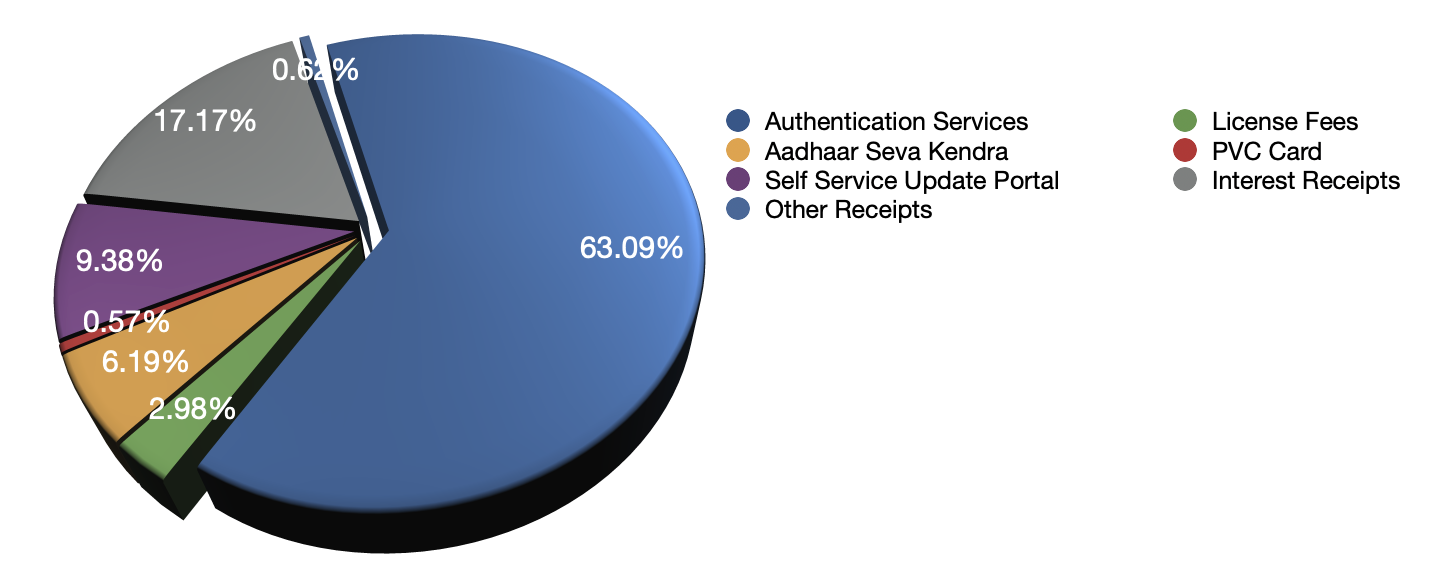
By 2018, UIDAI had spent over $1.3 billion with no income. In 2019, UIDAI started levying charges on its Yes/No authentication and eKYC APIs for certain categories of Authentication service users. UIDAI also started its own Aadhaar Seva Kendras wherein a resident could use enrollment and update services for a token fee. PVC Card Service, Self Service Update Portal (SSUP) and Interest Income are other major sources of UIDAI income. The revenue breakdown is shown below.
Losses for UIDAI have narrowed from a loss of $100 million in 2022 to $20 million in 2024 and appear to be on track to be operationally break-even within the next couple of years.
Aadhaar’s Yes/No authentication supports four options - fingerprint, iris, facial, and OTP (One Time Password). While Aadhaar registration captured fingerprint and iris scans as part of the mandatory biometric enrollment process, saturation coverage of mobile phones has ensured that Yes/No authentication requests are almost exclusively OTP or facial recognition.
India, with its first-mover teething costs, was able to achieve saturation coverage at a little over $1 per ID. It took UIDAI about 10 years to start monetizing its APIs and another about 10 years before it could potentially break even.
In 2024, the World Bank approved a $350 million finance package to support Ethiopia’s digital ID program Fayda. As part of the package, $50 million was provided as a grant for host communities and refugees, the remaining $300 million as a long-term loan. Ethiopia has a population of about 140 million people. That would translate to a projected cost of over $2 per ID, double what it cost India.
UIDAI is not profitable to date, 16 years after generating the first Aadhaar ID. Managing the biometric information for over 1.4 billion residents is super-expensive in storage, computing, data center and network costs, with an yearly expenditure of over $140 million. UIDAI is still being subsidized by the government. How do countries extract value from their digital ID systems, monetize their investments, pay back the loans and avoid a debt trap?
The Value Function for DPI
In 2017, The Economist declared that “The world’s most valuable resource is no longer oil, but data”. India’s last census was done in 2010. The Aadhaar data filled in the gaps providing last-mile accurate demographic data for over 1.4 billion residents. Aadhaar data was the oil that would fuel digital India.
Aadhaar was about identity, but the value was in the data. It provided data about geographical distribution of population, age and gender demographics. It revealed insights into population clusters, household sizes, the underserved populations, where the infrastructure gaps were, and what investments were needed to deliver physical equity. The data provided predictive analytics into future demand for schools, healthcare facilities, jobs, social services, and the need to address gender equity.
The Jan Dhan Yojana (Financial Inclusion Mission) filled in the infrastructure gaps. Instead of people going to the banks, the banks came to the people, and with the banks came electricity to power the equipment and homes, clean water and sanitation, roads to transport goods, access to services like health and education, and schools to skill youth to access and operate the digital future.
Aadhaar data enabled the cleansing of the social security benefits registry and the removal of duplicate, fake, and ineligible beneficiaries. Direct Benefits Transfer allowed leakages to be plugged and has resulted in cumulative savings of over $47 billion since 2013.
In 2025, The Economist declared that extreme poverty in India had dropped to negligible levels. This decline was attributed to robust social safety nets, challenging traditional beliefs that poverty reduction required rapid large-scale industrialization. India had leveraged the 'new oil', filled the infrastructure and social needs gaps, and delivered physical and social equity to its residents.
In FY 2024, India transacted over $3.0 trillion in UPI transactions. Unlike credit card transactions, UPI does not involve a third-party intermediary. UPI transactions are direct bank-to-bank transfers and don’t incur transaction fees. In FY 2024, UPI saved businesses over $70 billion in credit card merchant transaction fees and about 275 megawatt-hours of power . NPCI (National Payments Corporation of India) is the public sector company that manages the UPI infrastructure and payment APIs. The figure below shows the revenue and expenditure for NPCI over the years.
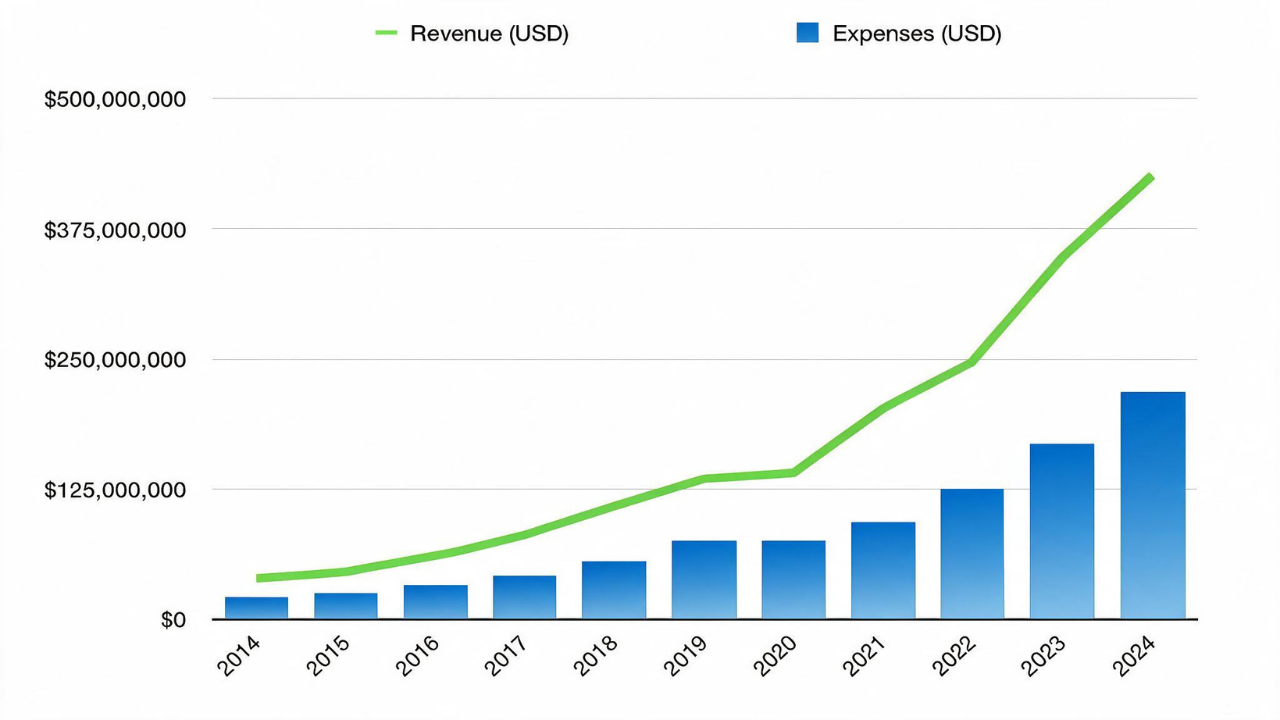
NPCI has been profitable since the start and recorded over $200 million in profits in FY24, and if current trends hold, potentially over $1 billion in profits by the end of the decade.
One of the reasons for the high costs of healthcare is fragmented data and incompatible IT systems across healthcare providers and insurers. The lack of an integrated healthcare system where patient records can be accessed seamlessly across providers and payers inflates waste and costs, and leads to medical misdiagnoses, repeat testing, inappropriate medications, and polypharmacy.
The Ayushman Bharat Digital Mission (ABDM) is creating the digital healthcare stack that includes a healthcare facilities registry, a healthcare professionals registry, and a national data exchange that allows providers and payers to seamlessly integrate and process claims. It will enable portable health records, which will significantly improve care delivery. Open data exchanges will eliminate data silos, leading to a significant reduction in fraud, waste, and overall costs. ABDM will ensure that the entire healthcare system is cashless, frictionless, and seamless. It will significantly lower the cost of healthcare and help governments meet SDG 3 (Health for All) targets.
India spends around 3% of its GDP on healthcare. With the National Digital Health Stack, India has the potential to deliver free healthcare to all at 3% of GDP . The table below lists the savings from each of these sector stacks.
| Digital Infrastructure | Stack | Benefits |
|---|---|---|
| Aadhaar (Foundational ID) | Authentication Stack | Aadhaar data provided the insights into delivering physical equity, significantly lowered customer acquisition costs, and eKYC allowed faster, document-less authorization/check-ins for banks/telco/hotels, etc. [2] |
| Direct Benefits Transfer | Social Security Stack | $47 billion (cumulative savings since 2013) |
| Universal Payments Interface (UPI) | Cashless Payments Stack | $70 billion in FY2024 (savings in transaction fees) Significant energy savings Over $200 million, annual NPCI profits Lower cash printing costs [3] |
| Ayushman Bharat Digital Mission (ABDM) | Healthcare Stack | Significantly lowers IT costs for healthcare providers. Health and claims records portability. Can potentially provide free healthcare to all at 3% GDP ($120 billion) and eliminate medical debt. Nation-scale health datasets will reduce algorithmic bias, accelerate the development of new drugs, and allow countries to craft data-driven health policies and localized healthcare interventions. [4] |
The government savings and profits enabled by DPI are transforming India into a cashless, faceless, paperless, and frictionless digital economy. Linking Aadhaar to a Vehicle registry allows automatic no-stop toll collections, enables e-tickets, and improves traffic flow, safety, and travel times. Linking Aadhaar to a Property registry offers better security against document fraud, faster and transparent property transactions, and significant cost savings by eliminating paper-based inefficiencies. Linking Aadhaar to a Land registry facilitates easier access to credit and crop insurance, eases enforcement of zonal protections, and lowers operational costs by replacing paper records with digital maps.
As Aadhaar is linked to other data registries, it will unlock hundreds of billions in further savings, generate new revenue opportunities, and improve the quality of life of residents. As the Emerging India model has shown, monetizing DPI requires countries to move beyond foundational ID systems and build sectoral stacks. Achieving it will need institutional capacity building, investments in high-quality data registries, data-skilling youth, and enabling access to easy-to-use customer-facing services.
Lessons for Second Movers
How do countries of the Global South replicate the Emerging India model, accelerate socio-economic growth, and achieve SDG targets? What are the lessons for second-mover countries? How can countries reap the second-mover advantage by avoiding India’s first-mover mistakes?
Separation of Concerns
Separation of Concerns is a basic software design principle that separates code and data into distinct layers or components, each with its own functionality and with minimal overlap. Reframing Aadhaar as a foundational ID, limited its scope but not its function. Foundational IDs must do authentication and nothing else. It must have a minimal set of attributes. For authentication, the minimal attributes needed are name, address, date of birth, gender, and photo.
Costco is a global membership-based warehouse club. To prevent non-members from using borrowed cards, Costco is rolling out mandatory membership card scanners at entrance doors. Upon scanning, the photo associated with the account appears on a monitor for staff to verify identity; a low-cost human-in-the-loop, private digital infrastructure solution to verify identity without requiring biometric data, or requiring algorithmic authentication.
Most services rely on facial or OTP authentication. Law enforcement agencies, Child Registration and Vital Statistics (CRVS) systems, Passport Services, and services like DigiYatra (which uses facial recognition to provide paperless, contactless, and seamless airport travel) maintain their own biometric registries. A central registry of biometrics is unnecessary, significantly increases costs, raises privacy concerns, and is vulnerable to data breaches.
The separation of the interface (APIs) from its implementation is also a powerful technique used to achieve separation of concerns. Open APIs foster innovation, reduce complexity, improve testability, enhance flexibility and increase collaboration. Open APIs avoid vendor lock-in, language lock-in, and allow context and locale specific implementations .
Separation of concerns and capturing a minimal set of attributes will significantly reduce the cost function. India delivered population-scale digital identity at a little over $1 per ID. Countries of the Global South have the luxury of learning from the Indian experience, and can architect their Digital Public Infrastructure at significantly lower costs.
Achieving digital equity, where population-scale services are available and accessible to all, is essential for monetizing investments in digital infrastructure. However, as the Indian experience shows, digital equity without physical equity only widens the digital divide, while digital equity without data equity increases wasteful spending and could potentially push countries into a debt trap.
Aadhaar and Data Equity
Most countries of the Global South are data-poor. Data poverty has a socio-economic and environmental cost. It widens existing inequities, limits access to opportunities, and can lead to increased environmental degradation.
Census data are decades old. Randomized surveys are often used to fill in data gaps. These surveys keep sample sizes small to manage costs and statistically tend to be last-mile inaccurate. Many National Statistics Offices face funding challenges in upgrading IT systems, capacity building, and data up-skilling.
The path to monetization is through good data. The data collected during the ID rollout holds immense value, is monetizable, and foundational to accelerating progress towards achieving SDGs. It gives governments a clear view of demographic distribution and trends, enabling them to target and deliver services effectively, achieve greater returns on social investments, and the ability to monitor money and resource flows across the country. Without good data, there is no digital transformation, no DPI, no AI/ML.
As AI-accelerated software engineering lowers the premium on code, the premium on high-quality data only increases. As large volumes of syntax-correct code becomes a commodity, curated data becomes that much more valuable. Countries that will lead the global digital economy are the ones that have outlined a national data strategy. Countries must invest in institutional capacity building and data-skilling. They must invest in quality data, ensuring that registries are correct, complete, consistent, and current.
Jan Dhan Yojana and Physical Equity
The Indian experience showed that digital identity is necessary but not sufficient. Aadhaar did help millions get access to services like health, education, and banks. The problem was, in the poorer regions and rural areas, health, education, and banking facilities were non-existent. Having a digital ID did not help when the brick and mortar facilities delivering these services were not available or accessible.
The financial inclusion mission (Jan Dhan Yojana) created over 570 million bank accounts with over $32 billion in deposits. Banks skilled local youth to act as last-mile extensions of the bank. Today, over 1.3 million Bank Mitras (Friends of the Banks) deliver doorstep banking services. This growth in customers, bank accounts, and deposits was not the result of any new technology but the result of old-fashioned good customer support that prioritized genuine human engagement.
Four S’s for success
If there is one lesson to take from the Emerging India model, it is that for socio-economic impact and meeting SDG targets, data equity must precede physical equity, and physical equity must precede digital equity. There are no shortcuts, no silver bullets.
Success with DPI is conditional on the 4 S’s – Saturation, Stack, Service APIs, and SDG metrics. Saturation ensures that no one is left behind, and early movers among service providers benefit from low customer acquisition costs, customer loyalty, and increased profits. Stack ensures that data is not fragmented but federated, and significantly reduces duplication of work and avoids fragmented analytics. Service APIs increase collaboration, increase citizen and private enterprise engagement, and allow localized implementations. SDG metrics provide a true measure of DPI’s impact, providing clarity and actionable intelligence into gaps and the targeted investments needed to accelerate the achievement of SDGs.
Without saturation, there is exclusion. Without a stack, there is no digital infrastructure. Without service APIs, there is no pathway to access the stack, and what remains are proprietary data silos. Without SDG metrics, there is no way of measuring impact. Prioritizing these 4 S’s will ensure that data can be efficiently consumed, effectively monetized, and ultimately leveraged to serve the public good.
Identity to Impact
Aadhaar provided high-quality data, actionable intelligence, and a trusted nation-scale process for verifying identity. Going from identity to impact will require an actionable framework that can baseline SDG status, provide transparency into underserved communities and geographies, identify gaps, make targeted investments, and quantify the return on investments. It will require reforming service delivery models, adopting best practices, and continuous and consistent monitoring of progress toward the goals.
The Metraa (Measure/Track/Reform/Accelerate/Achieve) framework leverages open data, digital transformation, digital public infrastructure, and sustainable models of service delivery. The Metraa framework will provide transparency into progress towards SDG targets and an accelerated path towards achieving them. It will foster collaborations and partnerships, boost local entrepreneurship, and put countries on a path towards sustainable resilience and social equity. The Metraa framework will enable countries to chart their own unique, measurable, and predictable paths towards digital sovereignty and achieving SDGs. It will create resilient communities, responsive governments, and a sustainable planet.
References
Dijkstra, Edsger W (1982). "On the role of scientific thought". Selected writings on Computing: A Personal Perspective. New York, NY, US: Springer-Verlag. pp. 60–66. ISBN 0-387-90652-5. Available at https://www.cs.utexas.edu/~EWD/transcriptions/EWD04xx/EWD447.html
The DPI Playbook - Data First, not Digital First. Available at https://hawkai.net/the-dpi-playbook-data-first-not-digital-first/
Digital Sovereignty and the Global South. Available at https://hawkai.net/digital-sovereignty-and-the-global-south/
Delay, Deny, Deduct. Available at https://hawkai.net/delay-deny-deduct/
Exporting Data, Importing Intelligence, Available at https://hawkai.net/exporting-data-importing-intelligence/
Achieving SDGs - An Actionable Framework. Available at https://hawkai.net/achieving-sdgs-an-actionable-framework/
Data Sources
UIDAI (Unique ID Authority of India) data is available at https://uidai.gov.in/en/media-resources/uidai-documents/annual-reports.html
Jan Dhan Yojana (PMJDY) data is available at https://pmjdy.gov.in/statewise-statistics
Direct Benefits Transfer (DBT) data is available at https://dbtbharat.gov.in/
NPCI (National Payments Corporation of India) data is available at https://www.npci.org.in/corporate-governance
State Bank of India (SBI) data is available at https://bank.sbi/corporate/AR2223/financial-legacy.html
Telecom Regulatory Authority of India (TRAI) data is available at https://www.trai.gov.in/release-publication/reports/telecom-subscriptions-reports
Supreme Court judgement on the Aadhaar Act. Writ Petition (Civil) No. 494 of 2012. It is better to be unique than the best. Because, being the best makes you the number one, but being unique makes you the only one. Available at https://www.scobserver.in/wp-content/uploads/2021/09/Aadhaar_35071_2012_FullJudgement-1-567.pdf
* Values reported in INR have been converted to USD at a constant exchange rate of $1 = ₹90