A DPI Primer for Governments
How do other countries translate DPI ambition to implementation? A practical guide for countries to make national DPI ambition a reality.
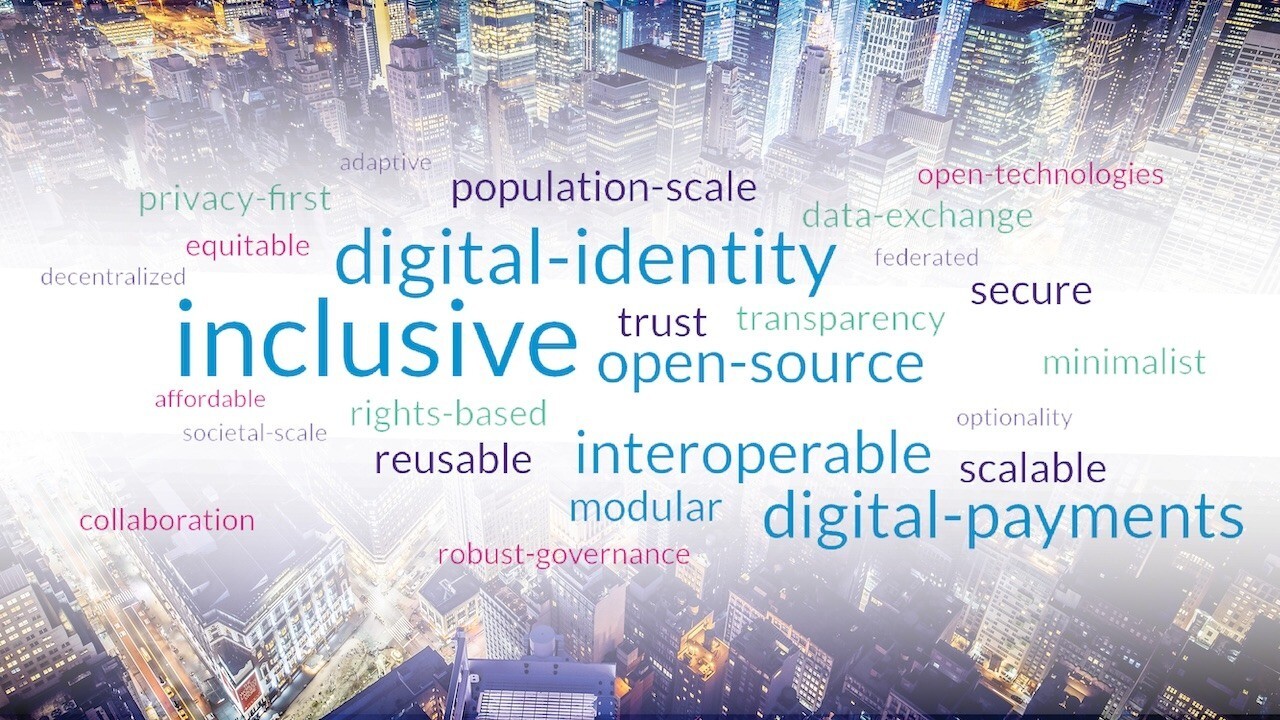
When asked to define Digital Public Infrastructure (DPI), practitioners offer a wide variety of responses. Rather than providing a standard definition, they typically highlight its essential characteristics. The most frequently cited attributes include interoperability, inclusivity, identity, sovereignty, accountability, open-source technology, and population-scale.
These words define desired outcomes, not how to deliver these outcomes. These words define desired attributes of a solution, not how to architect it. They raise more questions than answers. How do we translate DPI ambition to implementation? Should countries qualify open source digital public goods and customize them to their needs? What kind of skills are needed in the workforce? How do developers architect nation-scale digital services? How do you go from digital identity to lasting impact? How do you ensure citizen adoption? How do you measure success? How much does it cost? How do you finance it? Can you monetize DPI?
Most conversations around DPI center the narrative towards policy-makers. Once a country is committed, these conversations must center around establishing trust, partnerships, financing, technologies, timelines, costs, and ensuring that benefits reach all. How do you guide policy to enable DPI success? What are the words that will drive these narratives?
5C’s for Policy-Makers
During the UN Open Source Week 2026, the UNDP introduced the 5Cs framework - commitment, capacity, capital, community, and collaboration - to expedite the success of sovereign DPI [1]. Aimed at decision-makers of the Global South, this paper acts as a strategic roadmap to transition from isolated digital initiatives toward unified national digital frameworks capable of delivering population-scale services.
The 5Cs are commitment of high-level political leadership, capacity through investment in domestic technical expertise, capital, which represents a shift from short-term project funding to sustained investment across the full system lifecycle, community involvement, which means building public trust through safeguards-first design and robust data protection, and collaboration through which shared standards and open protocols can be adopted to enable cross-entity data exchange and regional integration.
Two of the C’s, commitment and capital, are high-level policy decisions and require sovereign guarantees. Similar to infrastructure projects, digital infrastructure also requires massive capital and multi-year commitments. Sovereign assurances are vital for mobilizing capital, giving investors the confidence needed to commit to long-term operations, and for securing public-private partnerships. Public and private sector partnerships are key to accelerating and delivering digital sovereignty and equity through the remaining three C’s: capacity, community, and collaboration.
Capacity, Community, and Collaboration
It is the role of government to ensure commitment and capital. Capacity building, community involvement, and collaboration require government, public, and private sector partnerships. While the government and public sector provide the regulatory frameworks, funding, and community connections, the private sector supplies rapid innovation, efficiency, and operational capacity. How do countries harness these combined assets, and enable collaborative partnerships to address complex local, regional, and national challenges? How do countries ensure workforce readiness, community trust, public/private collaboration, and deliver seamlessly integrated population-scale digital services?
India has over a decade of experience with operationalizing population-scale DPI that has resulted in massive public good. DPI connected over a billion people into the formal economy, significantly reduced welfare leakage, moved over a quarter billion out of poverty, and sparked a global blueprint for digital inclusion. What are the lessons for other countries looking to build similar workforce capacity, community trust, and collaborative partnerships? India’s DPI blueprint has the potential to transform emerging economies and advanced economies alike. The DPI architecture is well understood; much less understood are ownership, organization, and governance. It is illustrative to look at India’s DPI stack and understand its ownership, organization, and governance structures.
Unique Identification Authority of India (UIDAI) is a statutory government agency under the Ministry of Electronics and Information Technology. It is tasked with issuing a unique identification number, Aadhaar, to all residents of India. Digipin, developed by the Department of Posts, is India’s digital addressing system, a grid-based geospatial locator providing pinpoint accuracy for every property in India, whether urban, rural, or maritime. Aadhaar provides a unique ID to an individual. DigiPin provides a unique ID to every fixed property. MapMyIndia is a private company that provides detailed digital map data, location and navigation APIs, and boundaries shapefiles for developers and government services. Digital identity (Aadhaar), digital locator (DigiPin), and digital maps (MapMyIndia) provide the foundational services to create digital services.
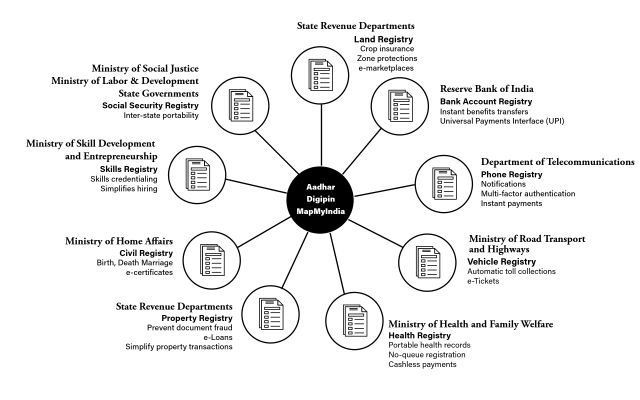
Every digital service requires authentication and authorization. Aadhaar APIs provide the means for digital authentication. Authorization determines who has access to a service and is provided by data registries. DPI services are built on these foundational layers of digital identity, digital addressing, and digital maps, using the data in the registries.
The National Payments Corporation of India (NPCI) is the umbrella organization that operates all retail payments and settlement systems across India. It was set up by the Reserve Bank of India (RBI) and the Indian Banks’ Association (IBA), functioning as a not-for-profit organization focusing on financial inclusion and digital payment innovation. Open Network for Digital Commerce (ONDC) is a state-owned non-profit company launched by the Department of Promotion of Industry and Internal Trade (DPIIT) under the Ministry of Commerce and Industry. Ayushman Bharat Digital Mission (ABDM) is building an integrated digital health infrastructure with an electronic health records and claims exchange. ABDM is managed by the National Health Authority (NHA) and operates under the Ministry of Health and Family Welfare.
The Ministry of Agriculture is creating AgriStack, a data registry that tracks farm boundaries, ownership, and crops grown. The Ministry of Road Transport and Highways has core systems like Vahan (Vehicle registration), Sarathi (drivers license), and FASTag (electronic toll collection) that connect to the India Stack and deliver paperless and seamless road services. The Ministry of Skill Development and Entrepreneurship is creating a National Skill Registry to unify skilling programs, certify credentials, and connect workers to jobs. The Ministry of Education issues APAAR (Automated Permanent Academic Account Registry) IDs. The APAAR registry tracks academic and extracurricular records, credits, and degrees for all students. Digiyatra is coordinated and overseen by the Ministry of Civil Aviation. Digiyatra leverages facial recognition to provide seamless, paperless, and contactless travel experience for air passengers at check-in, security, and boarding. DigiLocker, an initiative of the Ministry of Electronics and Information Technology, allows citizens to securely store, access, and share authentic e-documents that carry the same legal validity as physical originals.
The National Informatics Center (NIC) under the Ministry of Electronics and Information Technology (MEITy) designs, builds, and maintains critical digital public infrastructure, networks, data centers, and e-governance applications spanning central, state, and district levels. The National Institute for Smart Government (NISG) under the Ministry of Electronics and Information Technology is pivotal in India’s digital transformation and key to its e-governance initiatives.
Every ministry is digitally transforming their services building on the foundational DPI services. Each ministry creates its own vertical-aligned skilling strategy and capacity for the delivery of these services. NIC and NISG are horizontally-aligned agencies enabling whole-of-government consistency in content management, service hosting, security, performance monitoring, scaling, failure recovery, data reporting, API access, customer support, and usage statistics. They ensure that schemes deliver tangible outcomes for citizens by breaking departmental and ministerial silos.
India has the foundational digital stack; it has created the workforce capacity and collaborative partnerships; it is creating the population-scale digital services that the country needs. It also has some of the worst customer experiences to access a service. Citizens will adopt a service when user experience matches user expectations. Community adoption requires building trust first. The best technology solutions will fail if trust is missing.
Community trust is the ultimate multiplier of digital success. Governments build trust by ensuring transparent communication, citizen participation in decision making, reducing bureaucratic friction by streamlining digital portals, and improving perception by customer-friendly services, open data, and accountability.
Once a country has decided to adopt DPI, the vocabulary for policy-makers must change to the vocabulary understood by technologists and developers. These words must include content management, authentication, authorization, data registries, data exchanges, open data, open APIs, skilling, saturation, stack, and success metrics.
Content Management
India’s E20 fuel policy, which mandated a blend of 20% ethanol and 80% petrol nationwide, sparked public backlash, political division, and viral social media disputes. The government had to defend the E20 program, saying that ethanol blending had reduced India’s dependence on imported crude oil, saved on foreign exchange, reduced carbon emissions, and accused critics of the program of deliberate fear-mongering. The US is the world’s largest producer of ethanol and has been blending ethanol for decades without giving a choice to the consumer. Ethanol blending is routine in countries that are major producers of ethanol with no reports of mileage falling below manufacturer specified ranges or increased vehicular wear and tear.

The government response was to cite comprehensive scientific tests conducted by the Automotive Research Association of India (https://www.araiindia.com), the Indian Institute of Petroleum (https://www.iip.res.in), and the Society of Indian Automobile Manufacturers (https://oica.net/members/siam/). None of these websites share a common root domain name nor possess an official “.gov” domain. Citizens perceive the state as a single "government" entity rather than a collection of distinct ministries, authorities, or agencies. Consequently, when various institutions distribute information using inconsistent domain names, disparate content structures, mismatched layouts, and conflicting design systems, it creates a sense of state fragmentation. This lack of cohesion ultimately generates unnecessary friction and public frustration.
We live in a digital age where truths can easily be drowned in noise. In a democracy, it is not enough that a policy is good, it must also be perceived to be good. In a world of crafted narratives, highlight reels, and short attention spans, perception becomes reality. A policy or service designed without the user in mind, and without educating the consumer first, escalates downstream costs. Reactive communication is expensive. Democratic countries need trusted channels of active communication, and must build trusted sources of information.
Government websites and mobile applications are the front doors to access digital public services. Their architecture determines the customer experience, but unfortunately, they rarely get the attention they deserve. India is rich in IT talent but government websites are amongst the worst with un-intuitive navigation, broken links, frustrating load times, expired certificates, cluttered layouts, challenging forms, outdated CAPTCHAs, strict upload formatting limits, dated content, multiple redirects, data buried in PDFs, and an overall poor customer experience. A look at Indian government websites show that a number of Content Management Systems (CMS) including WordPress, Joomla, Drupal, Next.js are in use.
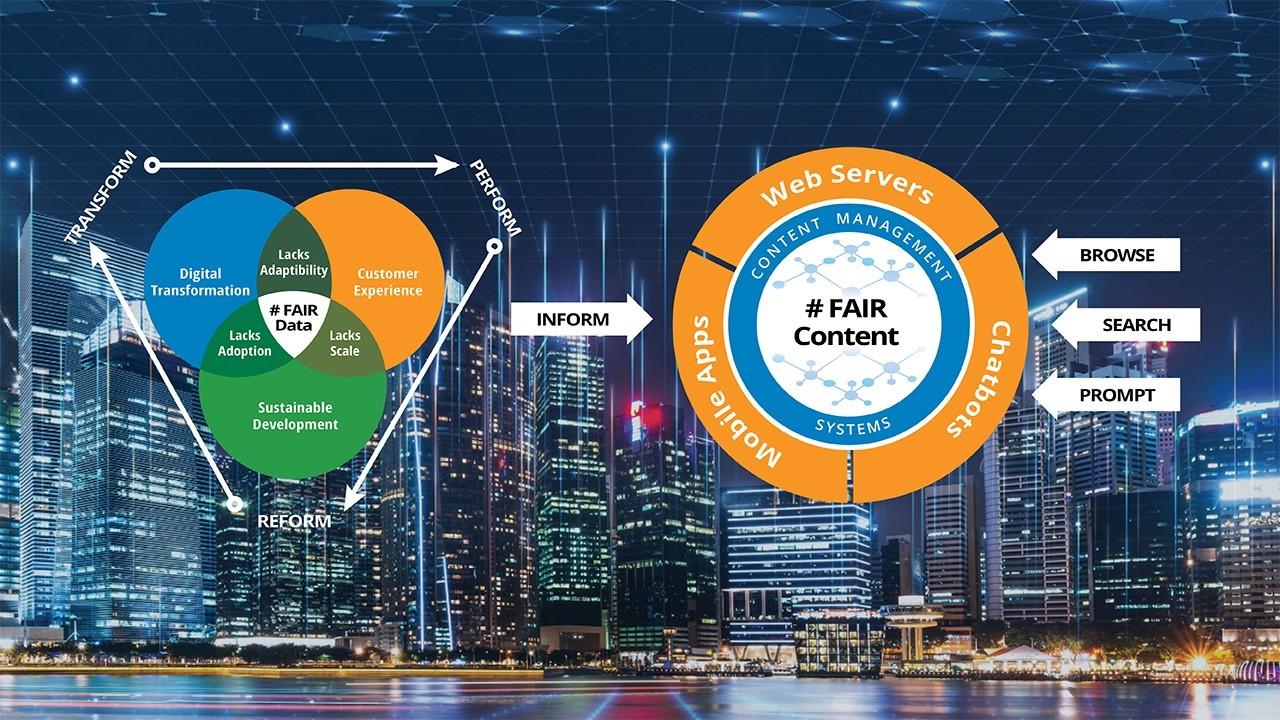
In-bound communication is highly efficient for relationship-building, customer support, and achieves a significant higher ROI over time. As citizens initiate the interaction, they are already interested and receptive. People rarely visit websites directly, they find content through search or AI prompts. It is not enough that content exists, it must be organized, relevant, and optimized to surface to the top in any search query. Content and data must be structured and organized using the FAIR principles [2] of findability, accessibility, interoperability, and reusability. The FAIR principles emphasize machine-actionability.
DPI success relies on citizen trust. Citizen trust requires a content strategy that ensures a consistent user experience across all government websites, applications, and DPI services. A horizontally-focused DPI agency, like the National Institute of Smart Governments (NISG), must standardize on an open source Content Management System (CMS), create content standards, standardize design systems, and provide customizable templates that provide consistency to district, state, and central websites, ensuring that content and data are organized using the FAIR principles of findability, accessibility, interoperability, and reusability. There can be no “smart government” without a well defined content strategy.
Authentication, Authorization, and Data Exchanges
At the core of any digital transformation is identity. Whether it is opening a bank account, getting a SIM card, applying for credit, registering for school, or receiving social security benefits, access depends on your ability to establish your identity. In many parts of the world today, to open an account requires you to present copies of some government issued ID, an attested proof of address, a referral, and potentially an initial deposit. The process itself could take weeks, with little guarantee of success. Establishing identity costs time and money and this process has to be repeated for any new service.
Digital identity simplifies the process with authentication done in seconds. Using digital APIs, identity can be confirmed instantly, and access granted, bringing down the cost of customer acquisition dramatically. Aadhaar, India's digital identity solution, brought down costs for verifying identity from around $12 to 6 cents. While digital identity allows authentication and provides access to a service, it does not determine what you can do with the access. That is determined by authorization.
Authorization determines what a user can do once you have been authenticated. While digital identity enables service authentication, it is data registries that enable service authorization. A data registry is an authoritative source of data, a system of record about a specific piece of information. Applications and services need data. The registry provides the data. Linking identity with a registry, enables a service. Each registry is typically managed by a different ministry or agency. Digital Identity ensures that it is the same person across all the various registries and agencies. It protects the individual from identity theft and the agency from fraud.
Data is not static. New systems of record are constantly being created and need to flow across entities. Health claims data moves between healthcare providers and health insurance providers. Scoring credit for determining lending rates requires consolidating data between banks and financial institutions. Order fulfilment requires data moving between suppliers, buyers, and logistics providers. Verifying a new hire requires credentials to move from educational and skilling institutions to the hiring corporations. When the data exchange protocol is not standardized, it leads to operational inefficiencies, delays, and data silos.
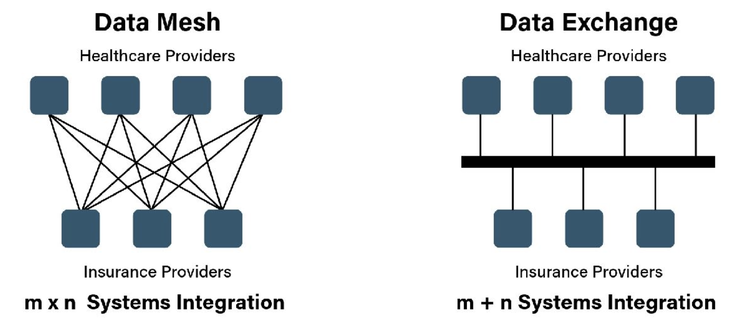
Open data exchange protocols and open programming interfaces eliminate data fragmentation, and replace M x N custom integrations of a data mesh with a M + N standardized integration of the data exchange. Sector-specific data exchanges break down data barriers, streamline and accelerate operations, provide transparency, and significantly cuts down on fraud.
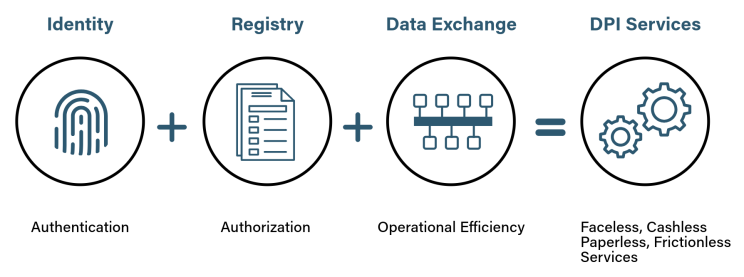
A national digital ecosystem built on digital identity for authentication, digital registries for authorization, and data exchanges for operational efficiency, will enable contactless, cashless, paperless, and frictionless population-scale services.
Open Data and Open APIs
Open source is software where the source code is made available and can be used as-is, modified, enhanced, and freely distributed. While the software is technically free, the total cost of ownership is hard to measure and quantify. As the source code is public, it also opens itself to malicious actors who can exploit vulnerabilities in the code. Open source software can be modified; its data models and even its application programming interfaces (APIs) changed. As the APIs can be modified, instead of interoperability, what remains are proprietary data and code silos.
While open source is the right narrative for policy makers, for technologists and developers the focus must be on open APIs and open data. This provides flexibility and does not constrain countries to a specific implementation or language. Open data and open APIs are also key to creating data exchange protocols.
Open API fosters innovation, enhances operational efficiency, and provides significant value to the provider, developers and partners who build applications and services on it.
Open source creates dependency. Open data and open APIs create ownership and encourage collaboration. Today, AI is generating code and reducing the cost of code generation to near zero. When the premium on code goes down, the premium on good data only goes up.
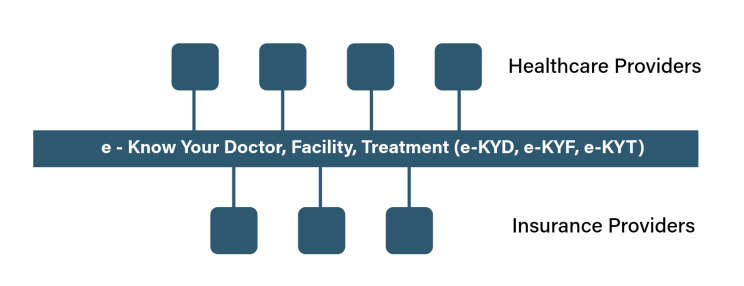
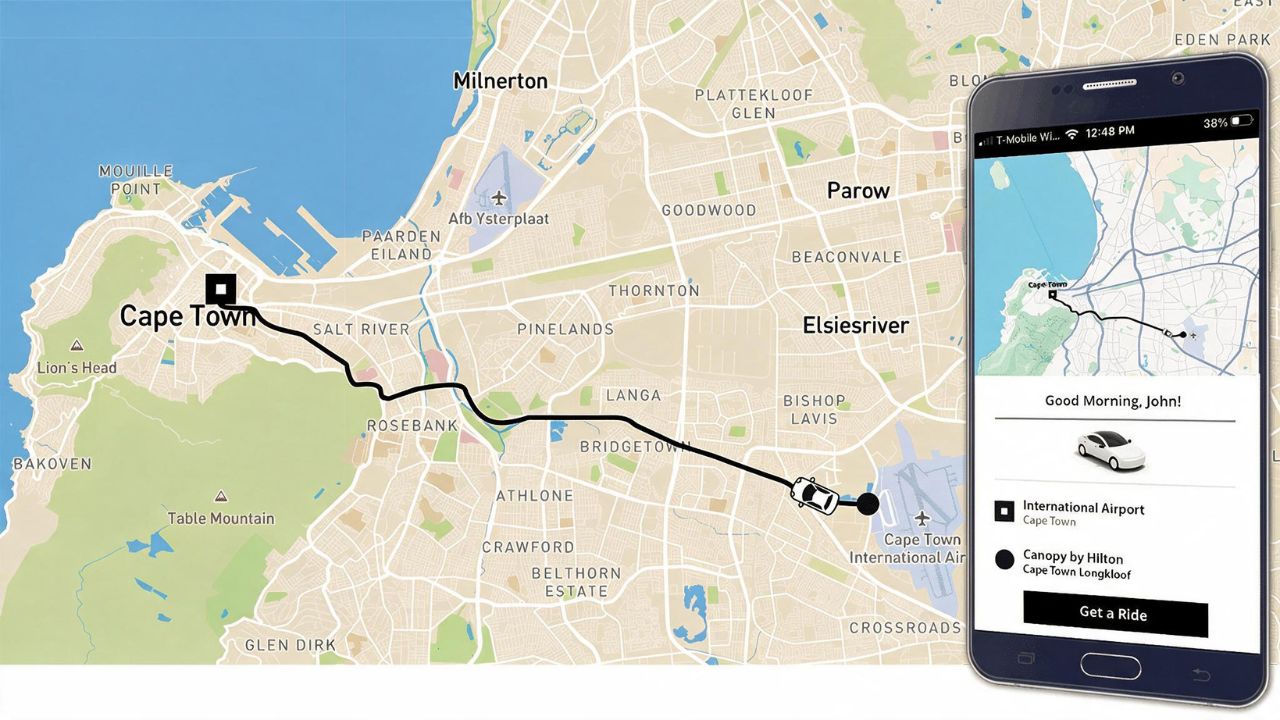
The Ayushman Bharat Digital Mission (ABDM) specifies the data exchange protocol and interfaces for connecting healthcare providers with health insurance providers. The Open Network for Digital Commerce (ONDC) specifies the data exchange protocol and interfaces for connecting producers and consumers. Bharat Taxi, an initiative of the Ministry of Co-operation is a ride-hailing service built on ONDC that connects riders with drivers. The One District One Product (ODOP) initiative, promoted by the Ministry of Commerce and Industry, allows vendors to list their products on ONDC giving them national and global reach. Products are promoted with a Geographical Indication (GI) tag ensuring that customers get authentic goods while branding the region itself.
Bharat Skill Exchange is the national digital platform connecting job seekers with training, opportunities, and jobs. TReDS (Trade Receivables Discounting System) is an RBI regulated digital platform that allows MSMEs to discount their unpaid invoices and get instant cash flow from banks and financial institutions. It specifies the data exchange protocol and interfaces that connects sellers, buyers, and financiers.
Open data exchanges and open APIs will allow for nation-level datasets to be de-identified and made available for shared research. The availability of these population-scale datasets will give data analytics, ML, and AI workloads the data volumes to avoid algorithmic bias, researchers the ability to replicate and verify results independently, businesses the ability to accelerate the development of new products, governments the ability to track and eliminate fraud and waste, and countries the ability to craft data-driven policies and hyper-localized solutions.
Saturation, Stack, Service APIs, SDG Metrics
Uganda’s national ID system, commonly known as Ndaga Muntu, is a mandatory digital ID containing biometric and personal data. The National Identification and Registration Authority (NIRA) of Uganda issues a unique number and a national ID card to those who pass a citizenship verification process. The ID is designed as a universal ID, with over 100 personal identifiable attributes, including blood type, collected and stored in a central database.
Aadhaar was similarly conceived as a universal ID, a cardless biometric ID that could authenticate and authorize access to services. While the issuance of Aadhaar IDs reached its intended target by 2018, the broader socio-economic impact was negligible. Despite an investment that exceeded $1.3 billion, the Aadhaar project showed few positives to justify its cost.
Aadhaar was re-conceived as a foundational ID that would not replace but link all other functional IDs (driver’s license, tax ID, bank account, passport, health ID, child registration ID, etc). It allowed for the separation of concerns ensuring that privacy issues were separated from authentication issues. The functional ID data was secured in registries where it always resided, with ownership of data well defined, while allowing the foundational ID to guarantee uniqueness and asset ownership. Aadhaar, the foundational ID, managed authentication, while the functional IDs managed authorization.
Recasting Aadhaar from a universal ID to a foundational ID that linked other functional IDs proved to be a pivotal change. In 2018, three key factors converged – saturation coverage of Aadhaar IDs, saturation coverage of bank accounts, and a dramatic fall in mobile data rates (enabling saturation coverage of digital access). This saturation trifecta [3] would create the foundation for India’s rapid digital, financial, and socio-economic transformation.
Flipping the script on Aadhaar from a universal ID to a foundational ID transformed a costly technological failure into an architectural success. In 2019, Kenya initiated a universal ID project called Huduma Namba. In 2021, the High Court of Kenya halted its rollout for being in violation of the country’s Data Protection Act. Kenya replaced Huduma Namba with the Maisha Number, a unique personal identification number that links existing civil and national data registries [4]. Uganda’s NIRA should take a lesson from India’s and Kenya’s failure with a universal ID. The lesson is that governments must prioritize access to economic and social rights over the elusive promise of universal digital IDs [5].
The Emerging India model has shown that success with DPI is conditional on the 4 S’s – Saturation, Stack, Service APIs, and SDG metrics [6]. Saturation ensures that no one is left behind, and early movers among service providers benefit from low customer acquisition costs, customer loyalty, and increased profits. Stack ensures that data is not fragmented but federated, and significantly reduces duplication of work and avoids fragmented analytics. Service APIs increase collaboration, increase citizen and private enterprise engagement, and allow localized implementations. SDG metrics provide a true measure of DPI’s impact, providing clarity and actionable intelligence into gaps and the targeted investments needed to accelerate the achievement of SDGs.
Without saturation, there is exclusion. Without a stack, there is no digital infrastructure. Without service APIs, there is no pathway to access the stack, and what remains are proprietary data silos. Without SDG metrics, there is no way of measuring impact. Prioritizing these 4 S’s will ensure that data can be efficiently consumed, effectively monetized, and ultimately leveraged to serve the public good.
Reform, Transform, Perform, Inform
The institutional mindset of India’s digital bureaucracy is to essentially build a digital counterpart of the traditional paper processes they are meant to replace. Digitalizing a service replicates the offline procedure, which carries with it all the inefficiencies of the original paper-based process, with the additional frustrations of a poorly designed digital experience.
India’s DPI stack and APIs allow for the complete redesign of the customer experience and simplification of the workflows. Digital bureaucracy must evolve from isolated, agency-centric platforms into a cohesive DPI mindset. Transitioning bureaucratic systems require a deliberate pivot in how governments build, secure, and deliver services to citizens.
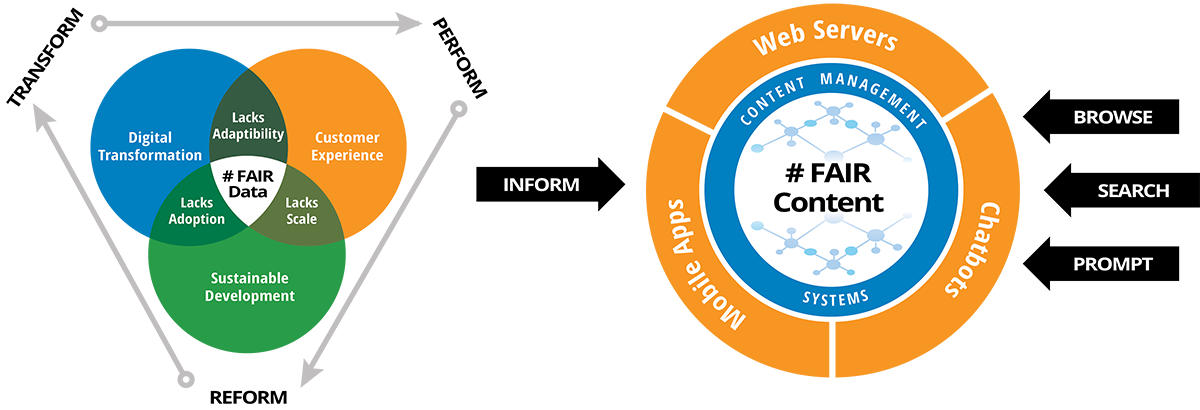
The Reform, Transform, Perform, Inform model is a strategic framework that guarantees success to any digital transformation. The Reform stage reevaluates and restructures legacy models of operation and ensures adaptability to change. The Transform stage implements the digital experience and workflows and ensures scalability. The Perform stage optimizes the user experience and ensures adoption. The Inform stage communicates with the users and ensures trust.
The best designed customer experience will not be adopted without citizen trust. Without trust, citizens will choose the comfort of the familiar over the discomfort of the new. Trust requires transparency and accountability. It needs a whole-of-government content strategy where citizens are kept informed, with straightforward redressal pathways, and a frictionless user experience.
If there is one lesson from the Emerging India model, it is that data equity must precede physical equity, and physical equity must precede digital equity [7]. Going from DPI ambition to impact will require an actionable framework that can baseline SDG status, provide transparency into underserved communities and geographies, identify gaps, make targeted investments, and quantify the return on investments. It will require reforming service delivery models, adopting best practices, and continuous and consistent monitoring of progress toward the goals.
The Metraa (Measure/Track/Reform/Accelerate/Achieve) framework [8] leverages open data, digital transformation, digital public infrastructure, and sustainable models of service delivery. The Metraa framework will provide transparency into progress towards SDG targets and an accelerated path towards achieving them. It will foster collaborations and partnerships, boost local entrepreneurship, and put countries on a path towards sustainable resilience and social equity. The Metraa framework will enable countries to chart their own unique, measurable, and predictable paths towards digital equity, digital sovereignty, and achieving SDGs. It will create resilient communities, responsive governments, and a sustainable planet.
The DPI Developer’s FAQ
This DPI FAQ answers the typical questions raised during DPI conversations. If a question is not answered here, please ask it in the comments.
What is “public” about DPI?
The general assumption is that “public” refers to digital infrastructure that serves the public good. We have maintained that inclusion without saturation, only widens the digital divide. The digital infrastructure must serve not just the general public but all of the public.
M-Pesa is a mobile phone-based financial service that allows users to deposit, withdraw, transfer, pay merchants, and access micro-loans. It is used by millions in Africa and has cut down the use of cash. It comes with high transaction fees, increases the cost of doing business, and has not significantly moved the unbanked into the formal economy nor had much of an impact on poverty reduction. Does M-Pesa qualify as DPI for digital payments?
The “public” in DPI must be seen from the view of ownership of data. India’s UPI, Brazil’s Pix, and Ethiopia’s EthSwitch are digital payments infrastructure where the data is owned by public institutions. This data has immense value, can be monetized, and can be used to serve public good.
Does Digital Identity require biometrics?
No. Aadhaar’s failure as a universal ID was because of the mandate of biometric authentication for receiving social benefits. Kenya’s Huduma Namba and Uganda’s Ndaga Muntu left millions locked out from social benefits because scanners did not work or because of patchy wireless networks [10].
Aadhaar’s Yes/No authentication API supports four options – fingerprint, iris, facial, and OTP (One Time Password). While Aadhaar registration captured fingerprint and iris scans as part of the mandatory biometric enrollment process, saturation coverage of mobile phones has ensured that Yes/No authentication requests are almost exclusively OTP or facial recognition.
A system architected without accommodating for the marginalized and the elderly will violate human rights, will cause exclusion, and will widen the digital divide. A digital identity solution must register only a minimal set of personal attributes. For authentication, the minimal attributes needed are name, address, date of birth, gender, and photo.
Does DPI require open source?
For standalone systems like databases (MySQL, Postgres, etc), operating systems (Linux), web servers (Apache, Nginx, etc), CMS (Drupal, WordPress, Joomla, etc), languages (Python, Java, JavaScript, PHP, etc), open source is absolutely the right choice. Open source prevents vendor lock-in and also ensures that new feature upgrades, security updates, bug fixes, and a global community of users and a shared knowledge repository are available. Even though these platforms are open source, users never need to update the source code or even look at the source code. The true power of open source comes from the community and not the code.
Public digital services are not standalone systems but need to integrate into other existing systems. A CRVS system does not just generate a birth certificate but must integrate with a digital identity service to get a unique ID, and update local population, citizenship registries as needed. In these cases, where you are actually modifying code to integrate and localize the process flow, open source is usually a liability. It creates dependency and locks you to a single language and associated ecosystem. The better option is to focus on open interfaces, metadata, open data exchange protocols, process innovation, and the customer experience.
The challenge for these services is not the code, but managing operational issues, ensuring security, scaling, fault-tolerance, observability, anomaly detection, threat mitigation, providing redressal mechanisms, and a frictionless customer experience. Whether it is digital identity, digital payments, or data exchanges, the focus should be on open application programming interfaces and open data. Open data and open public interfaces will create ownership, encourage collaboration, and ensure digital sovereignty.
Is Aadhaar a proof of citizenship?
Aadhaar was originally conceived as a universal ID, a cardless biometric ID that could authenticate and authorize access to services. A single system that would eliminate the need for multiple documents to establish identity and prove eligibility to access services; a single key that could authenticate and authorize, and prove citizenship if needed.
Aadhaar found success only when it was re-architected from a universal ID to a foundational ID that would not replace but link other functional IDs. Functional IDs authorize a person for a specific function. A driver license lets you legally drive, a passport lets you legally travel abroad, a voter ID lets you vote, a ration card gets you social benefits. They are all proof of identity, not of citizenship.
Citizenship is an act of law in India governed by the Citizenship Act 1955. India maintains national registries (national population registry (NPR) mandated by the Citizenship Act of 1955, national register of citizens (NRC) mandated by the 2003 amendment of the Citizenship Act 1955). If your name is in the NRC, it means that the government of India recognizes you as a citizen.
How does DPI impact AI?
The best AI model is unreliable without data that is high-quality, locally relevant, and large in volume. DPI provides high-quality, locally relevant, and population-scale data.
The availability of these population-scale datasets will give data analytics, ML, and AI workloads the context and data volumes to avoid algorithmic bias, researchers the ability to replicate and verify results independently, businesses the ability to accelerate the development of new products, governments the ability to improve operational efficiencies, and eliminate fraud and waste, and countries the ability to craft data-driven policies and hyper-localized solutions to improving the quality of life for its citizens.
How much should digital identity cost?
India spent over $1.3 billion for saturation coverage of Aadhaar. That averages to about $1 per person. National digital identity projects are usually funded by Multilateral Development Banks (MDBs).
The World Bank provided a loan of $300 million to Ethiopia’s national ID system, Fayda. Ethiopia has a population of about 120 million, which would average the cost to $2.5 per person. Uganda’s Digital Acceleration Project is financed through a $140 million credit line from the World Bank. Uganda has a population of about 50 million, which would average the cost to $2.8 per person.
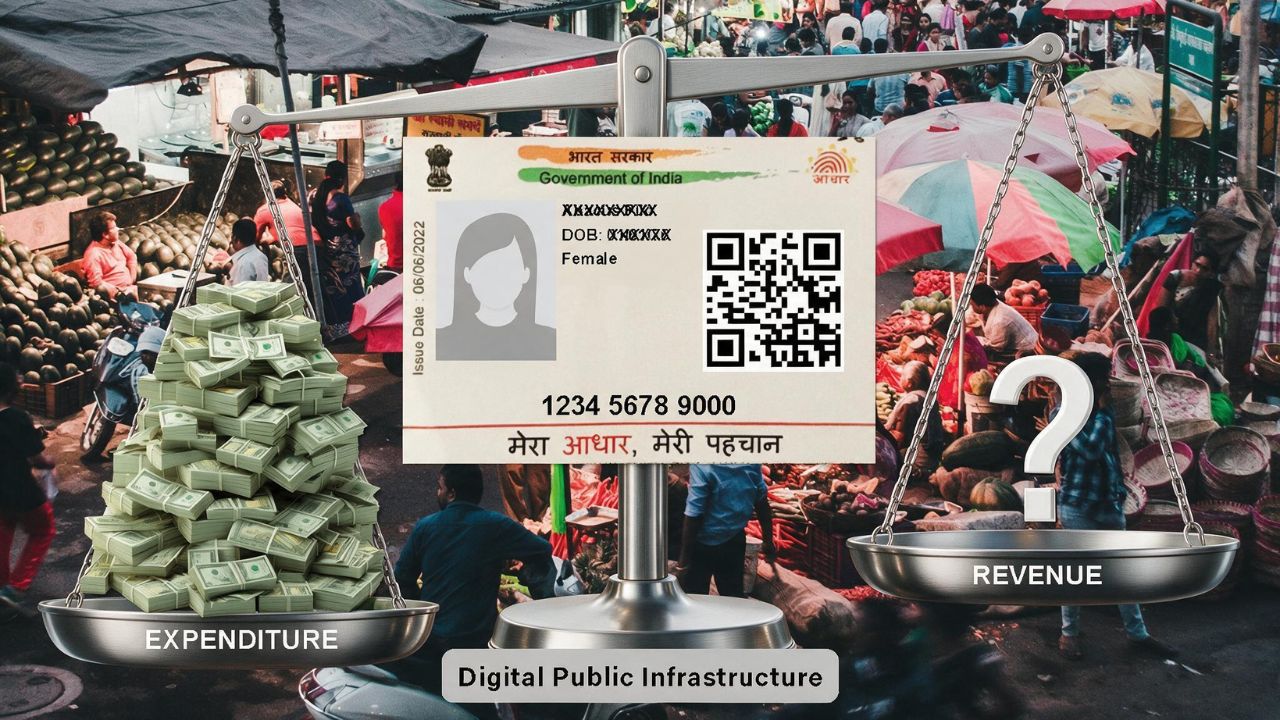
Similar to physical infrastructure, DPI also requires significant upfront financing. Inadequate funding risks exclusion and widening the digital divide, while overfunding risks pushing countries into a debt trap. Loans have to be paid back. A DPI monetizing strategy cannot be an afterthought.
How do you monetize DPI?
EthSwitch is the national payment switch of Ethiopia, which provides secure electronic payment infrastructure to connect financial networks, and manages the interoperability of ATMs, POS terminals, and instant payments. The table below shows how it has been able to monetize its digital payments infrastructure.
| Feature | EthSwitch (Ethiopia) | UPI (India) |
|---|---|---|
| Owner | All Banks | NPCI (RBI, Banks) |
| ATM/POS Support | Fully Supported | Fully Supported |
| QR Support | Partially Supported | Fully Supported |
| Fees for P2P | 0.4% | Free |
| Fees for merchants | 0.4% | Free |
| Profits | Over $16 million [9] | Over $200 million [3] |
The table below shows how India has been able to monetize its DPI stacks through savings and new revenue streams [3].
| Digital Infrastructure | Stack | Benefits |
|---|---|---|
| Aadhaar (Foundational ID) | Authentication Stack | Aadhaar data provided the insights into delivering physical equity, significantly lowered customer acquisition costs, and eKYC allowed faster, document-less authorization/check-ins for banks/telco/hotels, etc. [2] |
| Direct Benefits Transfer | Social Security Stack | $47 billion (cumulative savings since 2013) |
| Universal Payments Interface (UPI) | Cashless Payments Stack |
$70 billion in FY2024 (savings in transaction fees) Significant energy savings Over $200 million, annual NPCI profits Lower cash printing costs [3] |
| Ayushman Bharat Digital Mission (ABDM) | Healthcare Stack |
Significantly lowers IT costs for healthcare providers. Health and claims records portability. Can potentially provide free healthcare to all at 3% GDP ($120 billion) and eliminate medical debt. Nation-scale health datasets will reduce algorithmic bias, accelerate the development of new drugs, and allow countries to craft data-driven health policies and localized healthcare interventions. [4] |
How do you measure the impact of DPI?
The metric commonly used to illustrate the growth of DPI is the number of digital IDs issued. India had issued over a billion Aadhaar IDs by 2018, but it had no measurable socio-economic impact. DPI must deliver digital equity but digital equity must translate to socio-economic and ecological progress. Socio-economic and ecological progress are measurable through SDG metrics. The Metraa (Measure/Track/Reform/Accelerate/Achieve) framework [8] leverages open data, digital transformation, digital public infrastructure, and sustainable models of service delivery. The Metraa framework will provide transparency into progress towards SDG targets and an accelerated path towards achieving them.
Is there a roadmap for countries for DPI success?
If there is one lesson from India’s DPI success, it is that data equity must precede physical equity, and physical equity must precede digital equity [7]. In 2018, three key factors converged in India – saturation coverage of Aadhaar IDs, saturation coverage of bank accounts, and saturation coverage of digital access. This saturation trifecta [3] would create the foundation for India’s rapid digital, financial, and socio-economic transformation. Saturation coverage of digital ID accelerated data equity, saturation coverage of bank accounts accelerated physical equity, and saturation coverage of digital access is enabling digital equity. There are no shortcuts, no silver bullets for a country’s socio-economic-ecological transformation.
References
[1] Digital Public Infrastructure in Africa: A leapfrog catalyst for inclusive growth, available at https://www.undp.org/africa/publications/digital-public-infrastructure-africa-leapfrog-catalyst-inclusive-growth
[2] FAIR Principles, available at https://www.go-fair.org/fair-principles/
[3] Monetizing Digital Public Infrastructure, available at https://hawkai.net/monetizing-digital-public-infrastructure/
[4] Digital Public Infrastructure in Kenya: The Impact of M-Pesa and Huduma Namba, available at https://dpi.africa.com/digital-public-infrastructure-in-kenya-the-impact-of-m-pesa-and-huduma-namba/
[5] Mass exclusion from the national ID system in Uganda, Available at https://www.openglobalrights.org/human-rights-gateway-gatekeeper-digital-ids-uganda/
[6] Exporting Data, Importing Intelligence, available at https://hawkai.net/exporting-data-importing-intelligence/
[7] The DPI Playbook - Data First, not Digital First, available at https://hawkai.net/the-dpi-playbook-data-first-not-digital-first/
[8] Achieving SDGs - An Actionable Framework, available at https://hawkai.net/achieving-sdgs-an-actionable-framework/
[9] EthSwitch Reports ETB 2.6 Billion Profit as Ethiopia’s Digital Payments Boom Accelerates, available at https://www.itnewsafrica.com/2026/07/ethswitch-reports-etb-2-6-billion-profit-as-ethiopias-digital-payments-boom-accelerates/
[10] When the Machine says No: Digital Identity, Exclusion, and the Human Rights Cost of Broken DPI, available at https://dpi.africa.com/when-the-machine-says-no-digital-identity-exclusion-and-the-human-rights-cost-of-broken-dpi/
To learn more about DPI, watch our video and read our articles at https://hawkai.net/digital-public-infrastructure/
To learn more about SDGs, watch our video and read our articles at https://hawkai.net/sustainable-development/
To learn more about designing faceless, cashless, frictionless customer experiences, watch our video and read our articles at https://hawkai.net/customer-experience/
To learn more about AI and Digital Transformation, watch our video and read our articles at https://hawkai.net/digital-transformation/
To learn more about how DPI and data exchanges can provide universal, sustainable, and affordable healthcare, watch our video and read our articles at https://hawkai.net/health-care/